Ringneck Snake Diadophis punctatus. This is a huge geographic range.
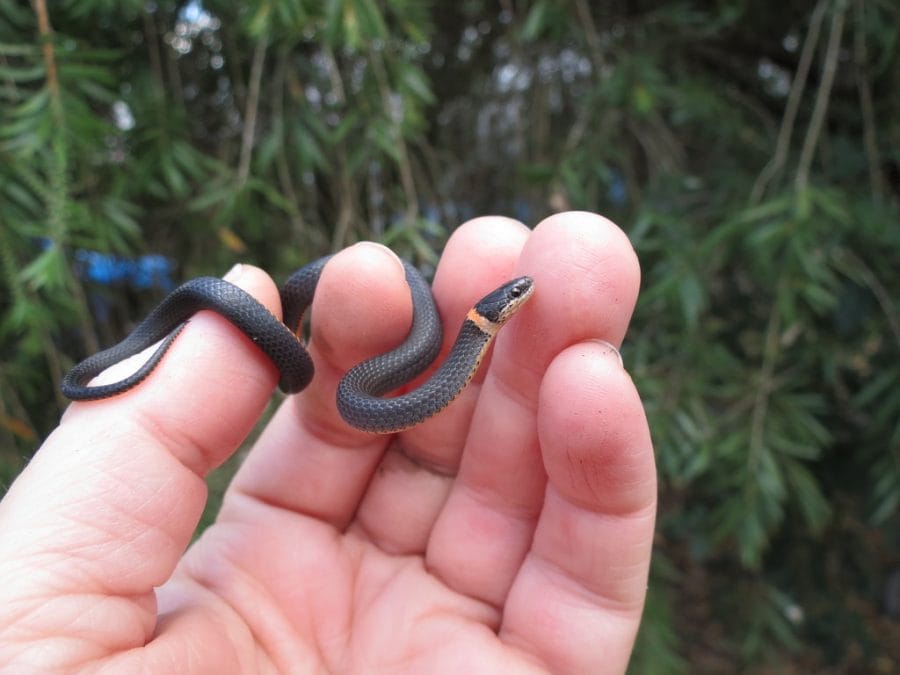
Ringneck Snake Facts Habitat Diet Life Cycle Baby Pictures
These snakes are most common in areas with shallow soil and surface bedrock where they are frequently found under rocks logs or bark.

Ringneck snake habitat. They may even eat the baby snakes of. They can eat worms small frogs and more. Their small stature nonaggressive nature and rear-facing fangs do not pose much threat to the humans.
Their favorite areas offer lots of ground cover for burrowing. They live throughout certain parts of the United States Canada and Mexico. The habitat of a ring snake Did you know that ringneck snakes have the largest geographic range in North America.
They hibernate underground and will also retreat underground during especially warm weather. Ringneck snakes can be found in virtually any habitat but seem to prefer wooded areas. In the Piedmont and Coastal Plain ringnecks are particularly common in moist areas including river floodplains moist hardwood forests and wetland edges.
Core Habitat Marginal Habitat. The subspecies called the Northern Ringneck is found right here in Northern Virginia but thanks to an astounding variability of diet and habitat Ringnecks can also be seen all up and down the East Coast in Mississippi and out west in the prairies and throughout the Midwest. Their range extends from Nova Scotia southern Quebec and Ontario to south-central Mexico covering the entire eastern seaboard except for areas along the gulf coasts of south Texas and northeast Mexico.
Metadata Data about data or how the map was made Legend. Habitat Of The Ringsnake. In their natural habitat in wet woodlands and near streams and ponds the ringneck eats small frogs salamanders and lizards as well as a variety of insects slugs and worms.
The snake is located in Canada Central and Eastern North America. What Do Ringneck Snakes Eat. The Key ringneck snake inhabits pine rockland habitat and the edges of disturbed portions of rockland hammocks Lazell 1989 Weaver et al.
S5 What does this mean. It inhabits forests woodlands bushy areas logs hillsides grasslands rocky and moist areas. They thrive when humidity levels are between 50 and 80 percent so make sure you ensure this for their enclosure.
Southern Ringneck punctatus Northern Ringneck edwarsii Mississippi Ringneck stictogenys Other Names none Conservation Status Global. Ringneck snakes are tropical or semi-aquatic snakes. As the name implies the snakes have a distinctive yellow ring on their neck.
The ring-necked snake is an attractive olive colored snake often found seeking refuge under rocks and logs. The Ringneck snake is one of the most common reptiles on the North American continent. They can be found within open woodlands near rocky hillsides or in wetter environments with an abundant cover or woody debris within riparian and wet environments especially in more arid habitats.
Key ringneck snakes inhabit tropical hardwood hammock and scrub habitat types found within their small range on Key West Big Pine Little Torch Middle Torch and No Name Keys. It seems to be restricted to areas near. A pool of water inside their enclosure is a good idea.
The habitats were identified using 1991. Keeping ring-neck snakes is relatively simple. Ringneck snakes are common reptiles that have a wide range of geographical distribution in North America.
Much more common in areas of higher moisture they are found sporadically through the drier areas of Texas including some of the moister areas of the Chihuahuan Desert. Locality records from FLMNH and Florida Natural Areas Inventory for ringneck snakes in the Lower Keys. Ringneck snakes are small snakes that live throughout North and Central America with a territory that spans from Canada all the way through Mexico.
Where do Ringneck Snakes Live These snakes prefer areas with gently moistened soil located on the banks of rivers ponds or streams swamps damp forests open woodlands under-stone or under-bark coverage and rocky hillsides. Predicted Distribution Reptiles do not migrate as some birds and mammals so the colored areas depict the predicted range for the Ringneck Snake year-round. The Ringneck snake loves leaves.
It feeds on frogs lizards salamanders earthworms and other small snakes swallowing its prey whole. Their habitat extends from the Canadian provinces of Nova Scotia Southern Quebec Ontario down to southern Mexico. This species is restricted to the Lower Keys and has been found on Key West and Big Pine Little Torch Middle Torch and No Name Keys Weaver et al.
Being close to riverbeds and ponds are also popular spots. Its common for ring snakes to live in dens with. Their favorite areas offer lots of ground cover for burrowing.
Ringneck snakes are common snakes occurring throughout eastern and central North America. 1992 Auth and Scott 1996 museum records. They prefer areas with abundant cover and denning locations.
A ten gallon tank will be suffice for 1 to 3 of them. Although they are versatile ring snakes thrive in wooded areas with moist soil. It is one of Maines 9 species of non-venomous snakes.
Ring-necked snakes are found in forested areas including forest edges and clearings. Ring-necked snakes occur in a wide variety of habitats. In the wild they can be found in swamps holes in the ground or along banks of rivers.
Key ringneck snakes inhabit tropical hardwood hammocks and scrub. The ringneck snake is a species of slender mildly poisonous snakes commonly found in southeastern Canada central Mexico and many parts of the US.