Do Sea Turtles Have Gills Or Lungs. The lungs are located right under the carapace and the vertebral column. A green turtle comes up for a breath, maldives.
Do Sea Turtles Have Gills Or Lungs from amazeas.blogspot.com
Just like other reptiles, sea turtles have lungs. Instead of a diaphragm, they have muscles lining the inside of their shells to help push air in and out. They have a slightly different structure than mammalian lungs, but work just as well when it comes to exchanging gases (oxygen and carbondioxide).
Humans breathe exclusively through their lungs but frogs use their lungs for only part of their respiration. In case of frogs the lungs are poorly developed.
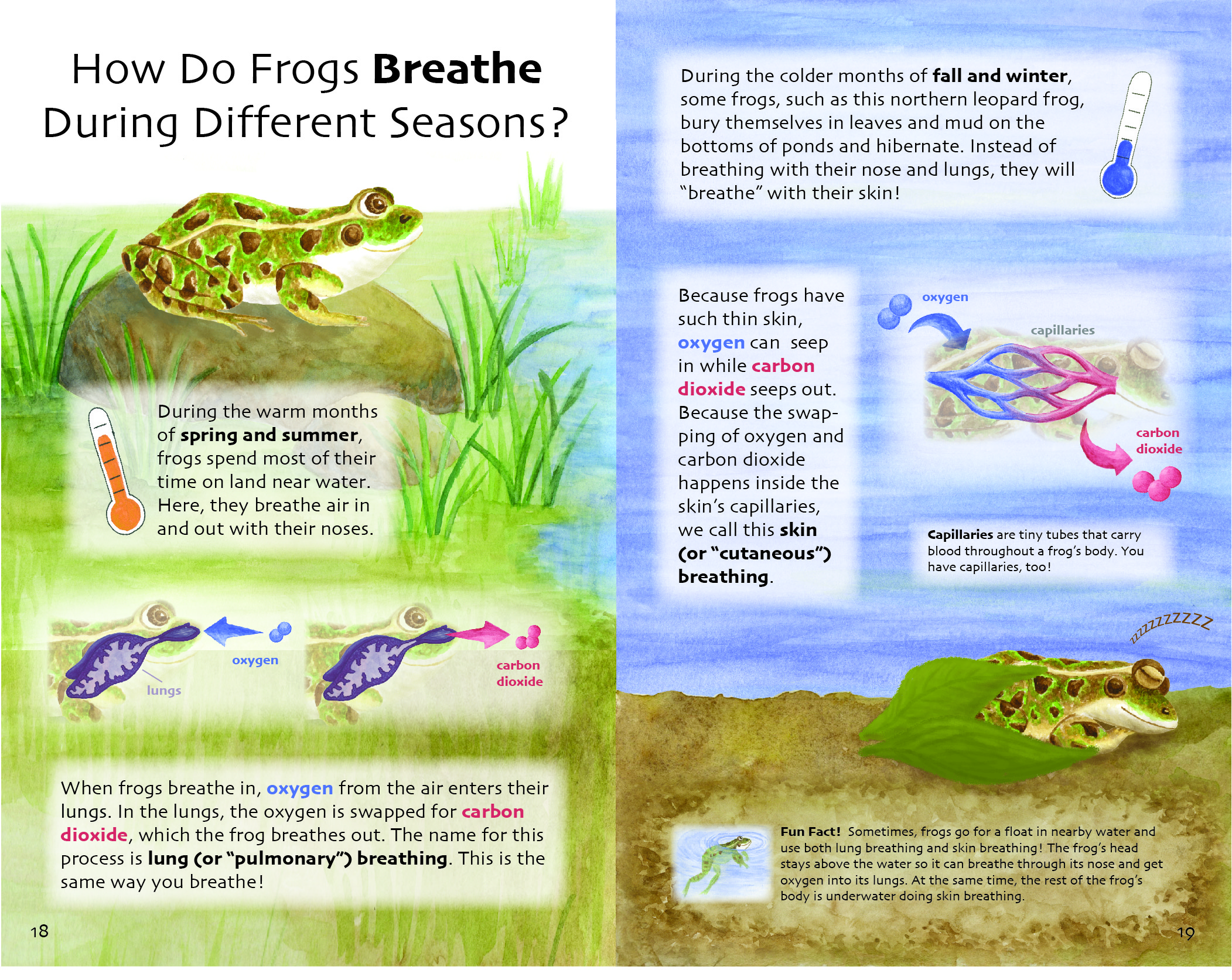
How Do Frogs Breathe During Different Seasons Artsengine
Apart from these two respiratory processes frogs have the ability to breathe through their mouth as well which is called buccopharyngeal respiration.
Does a frog have lungs. Respiratory Organs of frog. Frog lungs are hollow sacs with a small internal surface area limiting the amount of diffusion of oxygen. Without their gas-permeable skin they would suffocate depending solely on their lungs.
Frogs dont have the same structures as humans and other mammals so their lungs and respiration system work differently. There are some other reasons for breathing frogs underwater. So to meet all their oxygen needs frogs have one more ingenious mode of breathing up their sleeves.
Recently a large number of experiments have been conducted on the mechanism of the pulmonary respiration in frog. The frog has three respiratory surfaces on its body that it uses to exchange gas with the surroundings. Frogs use their lungs to breathe on land when necessary but they primarily use their skin for breathing.
This is because the lungs which only adults have are poorly developed. Fast cool water contains more oxygen than still warm water so it can get more oxygen directly from the. A frog can breathe in the water.
The adult frog becomes fully capable to respire through its lungs called pulmonary respiration. Compared to the size of a frogs body its lungs are quite small. Frog lungs have thinner walls and are almost like balloons.
It does not affect the frogs ability to take in oxygen because they absorb oxygen through their skin because their skin. Frogs have three-chambered hearts a feature they share with lizards. Yes frogs have lungs like we do and if their lungs fill with water they can drown just like us.
Frogs also have a respiratory surface on the lining of their mouth on which gas exchange takes place readily. Frogs can live both in the water and on land and have unique methods of breathing to adapt to varying environments. Their skin not only serves as an organ of respiration while in water but also as an organ of respiration when outside of water.
Humans breathe exclusively through their lungs but frogs use their lungs for only part of their respiration. On land frog uses their wet and moist skin their buccal cavity lining and also a pair of their lungs to breathe. Yes frogs have lungs like we do and if their lungs fill with water they can drown just.
Frogs Can Breathe Through Their Skin. All frogs have lungs right because otherwise they couldnt breathe. These experiments show that when the floor of the buccal cavity is lowered the fresh air is not only rushed into the buccal cavity but the air from the lungs is also drawn into the buccal cavity where the two airs mix.
They use their skin to absorb oxygen when underwater but if there is not enough oxygen in the water they will drown. All frogs have lungs right because otherwise they couldnt breathe. Since amphibians evolved from fish and fish have one air bladder or swim bladder frogs have 1 lung.
Both species have bronchial tubes leading to the lungs but human systems are more complicated with many branching bronchiole. Frogs have rather inefficient lungs. They also have frog lungs that allow them to breathe air on land.
They need to keep their skin moist to be able to breathe through their skin so if their skin dries out they are not able to absorb oxygen. Do frogs have lungs yes or no. The morphology of the lungs is very closely matched to the oxygen requirement of the body.
In frogs which can also do cutaneous respirationskin-breathers the lungs are another place for oxygen and carbon dioxide to be exchanged. Yes frogs have lungs like we do and if their lungs fill with water they can drown just like us. The main organs for aerial respiration are the two lungs.
Yes frogs have lungs just like we do have lungs but how do frogs breathe underwater with lungs. A frog breathes through its skin a process called cutaneous respiration. The passage through which the air enters and leaves the lungs is termed as respiratory tract.
The reason behind the respiration of frogs Underwater is its skin due to the absorption of oxygen through the skin. Do frogs only have one lung. Frogs can also breathe through their skin.
Small or no lungs does not cause a problem for amphibians however because they do much of their breathing through their skin. Its simple sac-like lungs are located in the back on either side of the heart. Thus the insufficient supply of O 2 obtained through lungs is supplemented by the moist skin and buccal cavity.
Although frogs are not born with lungs frogs develop lungs as a replacement for gills during the froglet stage of metamorphosis. The air bladder evolved into a lung. The fully aquatic Bornean flat-headed frog Barbourula kalimantanensis is the first frog known to lack lungs entirely.
Since frogs must always have moist skin they generally live in and around wet places. Mouse lungs are not hollow but filled with alveoli. All frogs have lungs right because otherwise they couldnt breathe.
Though frogs have lungs they arent well developed enough to do the job by themselves. Oxygenated blood from the lungs and de-oxygenated blood from the respiring tissues enter the heart through separate atria. Some salamanders have very small lungs and a few such as the red-backed salamander that is common in North American forests have no lungs at all.
The frogs skin believe it or not picks up the slack for the lungs. While at rest this process is their predominate form of breathing only fills the lungs occasionally. Fast cool water contains more oxygen than still warm water so it can get more oxygen directly from the water than most frogs can.
Frogs can also breathe through their skin. The skin in the lungs and on the lining of the mouthA frog may also breathe much like a human by taking air in.